Is it safe?
Power, trees, ceilings, wind, and roof access come first.

The roof is open
If wind or a limb opened the roof, a tarp can help keep more rain out until the permanent repair is ready. It is temporary, but sometimes temporary is what you need first.
Stay away from power lines, damaged trees, wet electrical areas, sagging ceilings, and any roof that is not safe to walk on.
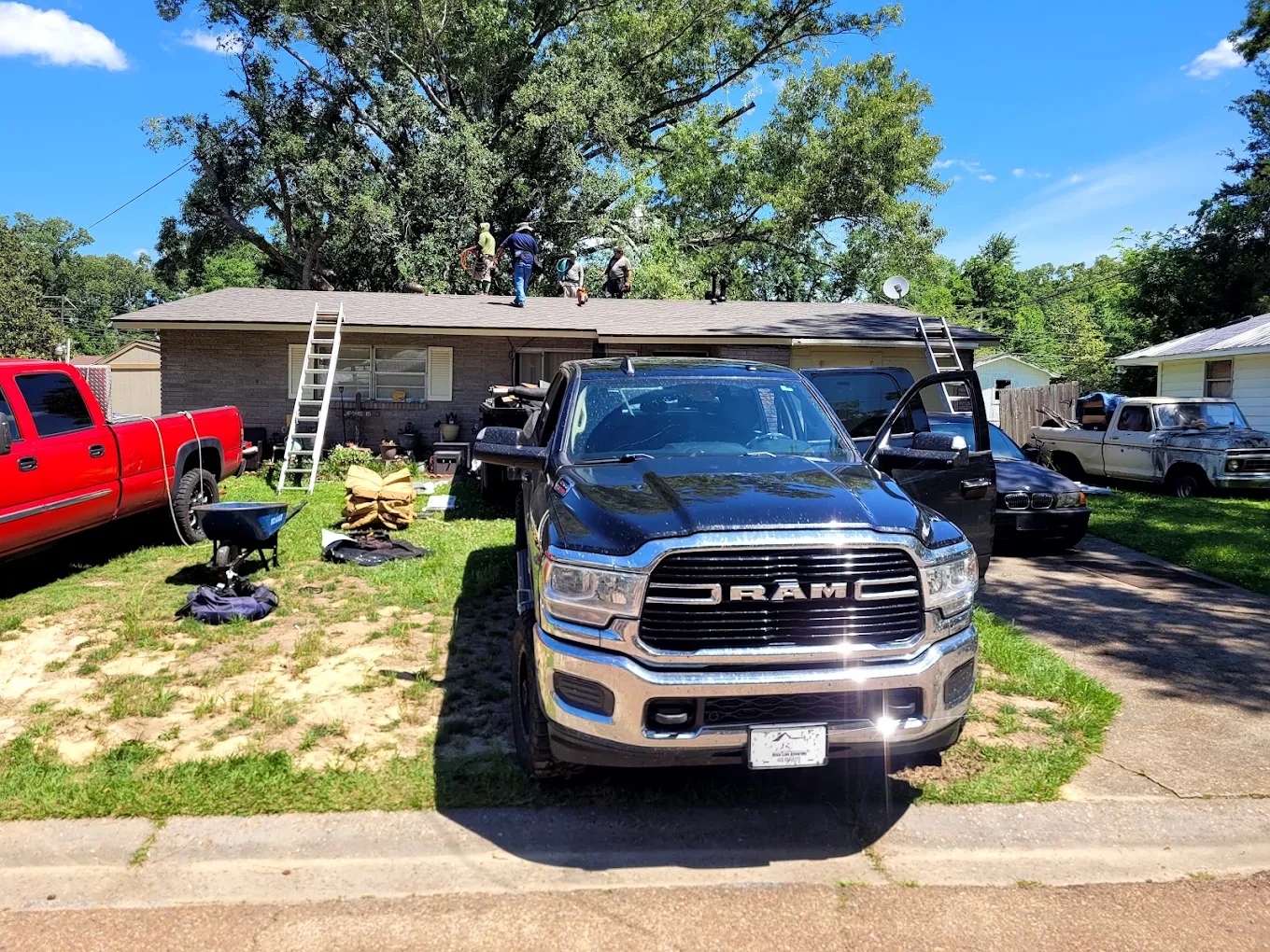
When the roof is open now
Call with the damage and current hazards. Temporary covering can follow when access is safe, with permanent repair planning close behind.
Call and say the roof is open
Keep everybody away from unsafe areas
We discuss temporary protection
Jamie inspects and estimates the permanent repair
What shapes this work
The tarp has to cover enough area to move water around the damage. After that, we inspect the roof and estimate the permanent work.
Power, trees, ceilings, wind, and roof access come first.
Tell us what happened and where water is entering.
The roof still needs a permanent repair after the tarp.
Using a tarp safely
It is temporary. Wind, sun, rain, and the damaged roof all affect how long it holds. Permanent work should follow as soon as possible.
Wet and damaged roofs are dangerous. If there is any doubt, stay down and call for help.
Call and say the roof is open. Stay clear of unsafe areas while we discuss emergency protection and the permanent repair.